Car TipsJuly 16, 20265 min read
How to Restore Faded Black Car Interior Trim for Under $20 (And Add $500 to Your Resale Value)
Faded, stained door panels and a worn steering wheel are the fastest way to kill a car's resale value. Here's the exact two-product method Carl uses to restore black vinyl and leather trim to like-new condition — the same technique he used to flip a trashed couch for profit on Facebook Marketplace.
CG
Carl's Garage Team
Expert Automotive Guides
## The $2,000 Car With a $200 Problem
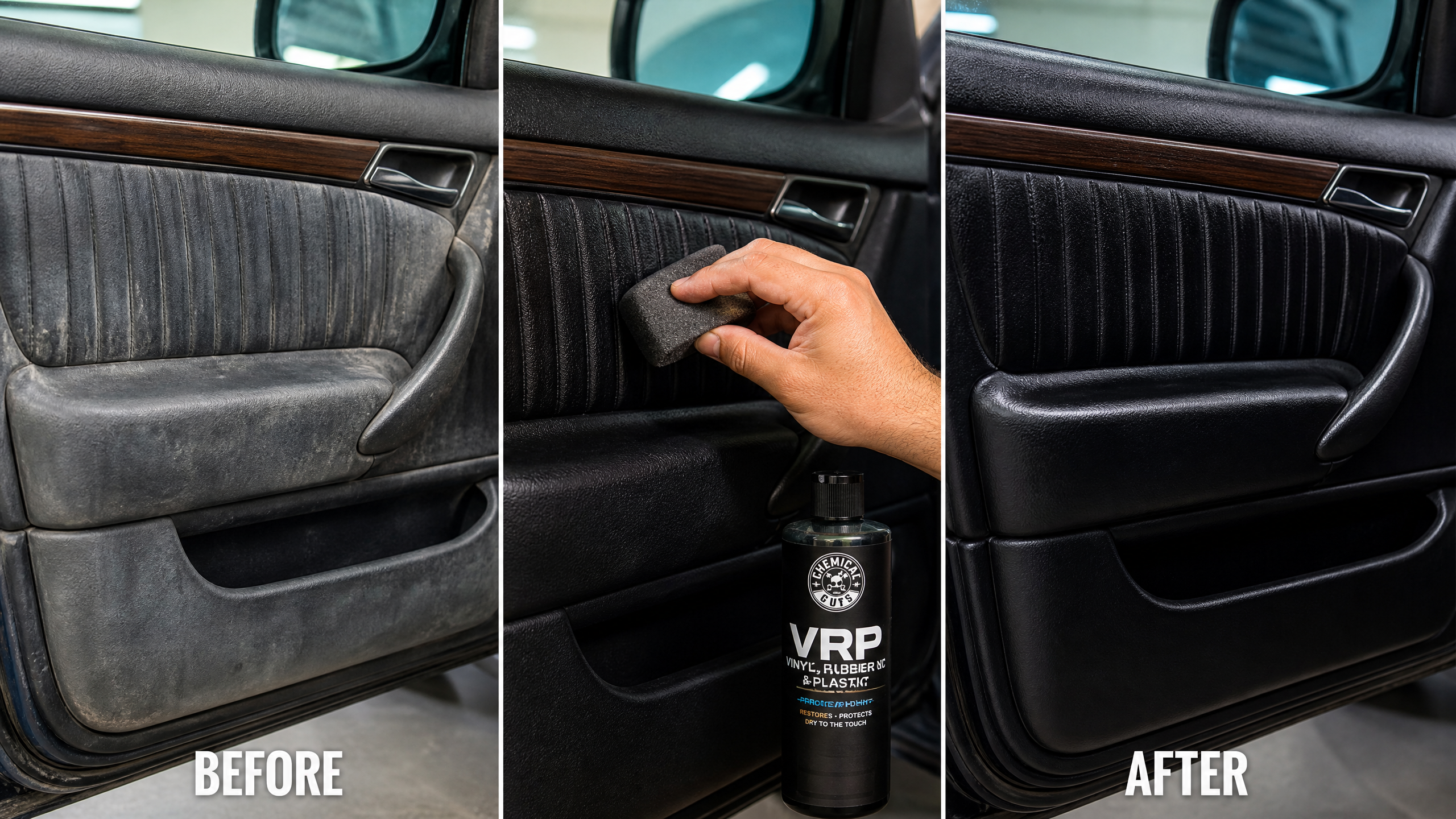
When Carl picked up a used car for around $2,000, the mechanical condition was solid. But the interior told a different story. A noticeable spill stain had discolored the black vinyl door panel — the kind of blemish that makes buyers lowball you by $300 to $500 before they've even looked under the hood.
The fix took about 15 minutes and cost less than $20 in supplies. Here's exactly how to do it.
## Why Black Interior Trim Fades and Stains
Black vinyl, leather, and plastic interior trim loses its color for a few reasons. UV exposure from sunlight breaks down the surface dyes over time, leaving a chalky, grayish appearance. Spills — coffee, soda, cleaning products — can strip the surface coating unevenly, leaving blotchy discoloration. And general wear from hands, arms, and clothing gradually removes the surface finish from high-contact areas like door panels, center consoles, and steering wheels.
The result looks worse than the actual condition of the material. The trim itself is usually structurally fine — it just needs its color and conditioning restored.
## The Two-Product Method
Carl's approach uses two products in sequence, and the order matters:
### Product 1: Leather & Vinyl Recoloring Balm
This is the workhorse of the restoration. A black recoloring balm (available on Amazon for around $12–$15) deposits pigment directly into the surface of the vinyl or leather, restoring the original color. It works on door panels, center consoles, dashboards, and steering wheels — anywhere you have black vinyl, leather, or hard plastic trim.
**Application technique:**
1. Apply a small amount of balm to a foam applicator or cotton swab.
2. Work it into the surface using a yellow applicator sponge in vigorous, circular motions.
3. Blend immediately — the product dries quickly, so work in small sections.
4. For textured surfaces, press the sponge firmly to get the product into the grain.
5. Pro tip: tape off adjacent surfaces (carpet, wood trim, chrome) before applying to avoid accidental staining.
The result after one application is a uniform, deep black color that covers stains, fading, and wear marks completely.
### Product 2: Leather Conditioner
The recoloring balm restores color but can leave the surface looking slightly matte or blotchy in certain lighting. The second step — a quality leather conditioner like Chemical Guys Leather Conditioner — solves this.
Apply a small amount over the treated area with a clean microfiber cloth. The conditioner removes any blotchiness, adds a subtle sheen, and gives the trim that "new leather" feel and smell. It also protects the restored surface from future UV damage and drying.
The combination of recoloring balm followed by conditioner produces a result that's genuinely difficult to distinguish from new trim.
## The Steering Wheel Test
The steering wheel is the highest-wear interior surface in any car. It's also the first thing a buyer touches during a test drive. Carl demonstrated the two-product method on half of a heavily worn steering wheel to show the before-and-after contrast side by side — and the difference is dramatic.
The worn half shows the typical grayish, cracked appearance of neglected leather. The treated half looks like it came off a new car. If you're selling a vehicle, restoring the steering wheel alone can change a buyer's entire perception of the car's condition.
## Beyond Cars: The Furniture Flip
The same two-product method works on leather and vinyl furniture. Carl used this exact combination to restore a "trashed" leather couch he found — and listed it on Facebook Marketplace for a significant profit. If you're into flipping furniture or vehicles, a $15 bottle of recoloring balm is one of the highest-ROI tools you can have.
## What This Does for Resale Value
Buyers make emotional decisions based on first impressions. A car with fresh, black interior trim reads as "well-maintained" even if the mechanical history is identical to a car with faded, stained panels. In practice, this 15-minute restoration can add $300 to $500 to your negotiating position — or simply prevent a buyer from using the cosmetic condition as a reason to walk away.
For anyone buying and reselling vehicles, or just preparing a car for private sale, this is one of the first things to do before listing.
## Quick Reference: Products and Steps
| Step | Product | Application | Time |
|---|---|---|---|
| 1 | Black Leather & Vinyl Recoloring Balm | Foam sponge, circular motion, small sections | 5–10 min |
| 2 | Chemical Guys Leather Conditioner | Clean microfiber cloth, light coat | 2–3 min |
**Surfaces it works on:** Vinyl door panels, leather seats, plastic trim, steering wheels, center consoles, dashboards
**Surfaces to avoid:** Fabric/cloth upholstery, suede, Alcantara, painted surfaces
## The Bottom Line
Faded black interior trim is one of the easiest cosmetic problems to fix and one of the most impactful for resale value. Two products, 15 minutes, and under $20 — that's the math. Whether you're flipping cars, preparing for a private sale, or just want your daily driver to look sharp again, this method delivers results that look professional without the professional price tag.
---
*Products mentioned are based on Carl's personal use and recommendation. Always test on a small, inconspicuous area first. Results may vary by surface condition and material type.*
Tags
Car DetailingInterior RestorationResale ValueDIYCar Flipping